Point tools
Single-task AI can't see the workflow before or after its step, so the work around it stays manual.

Single-task AI can't see the workflow before or after its step, so the work around it stays manual.
Assistants without access to the real record produce output no risk owner can rely on.
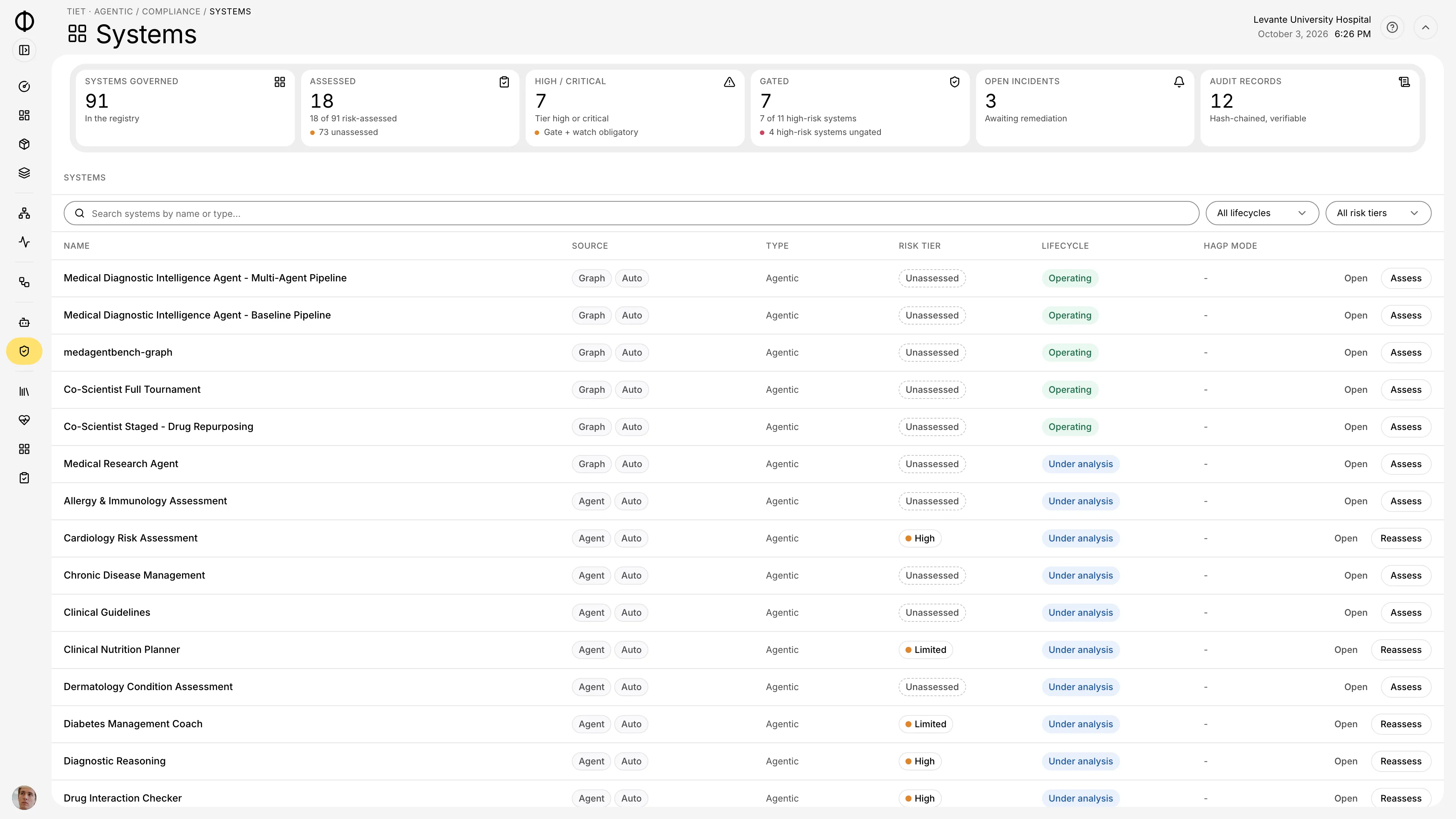
Without a documented purpose, evidence and accountability, the risk owner can't approve the release.
Documentation, coding, scheduling, coordination, data-quality and revenue templates, ready to configure for your process.
Read the docs (opens in a new tab)

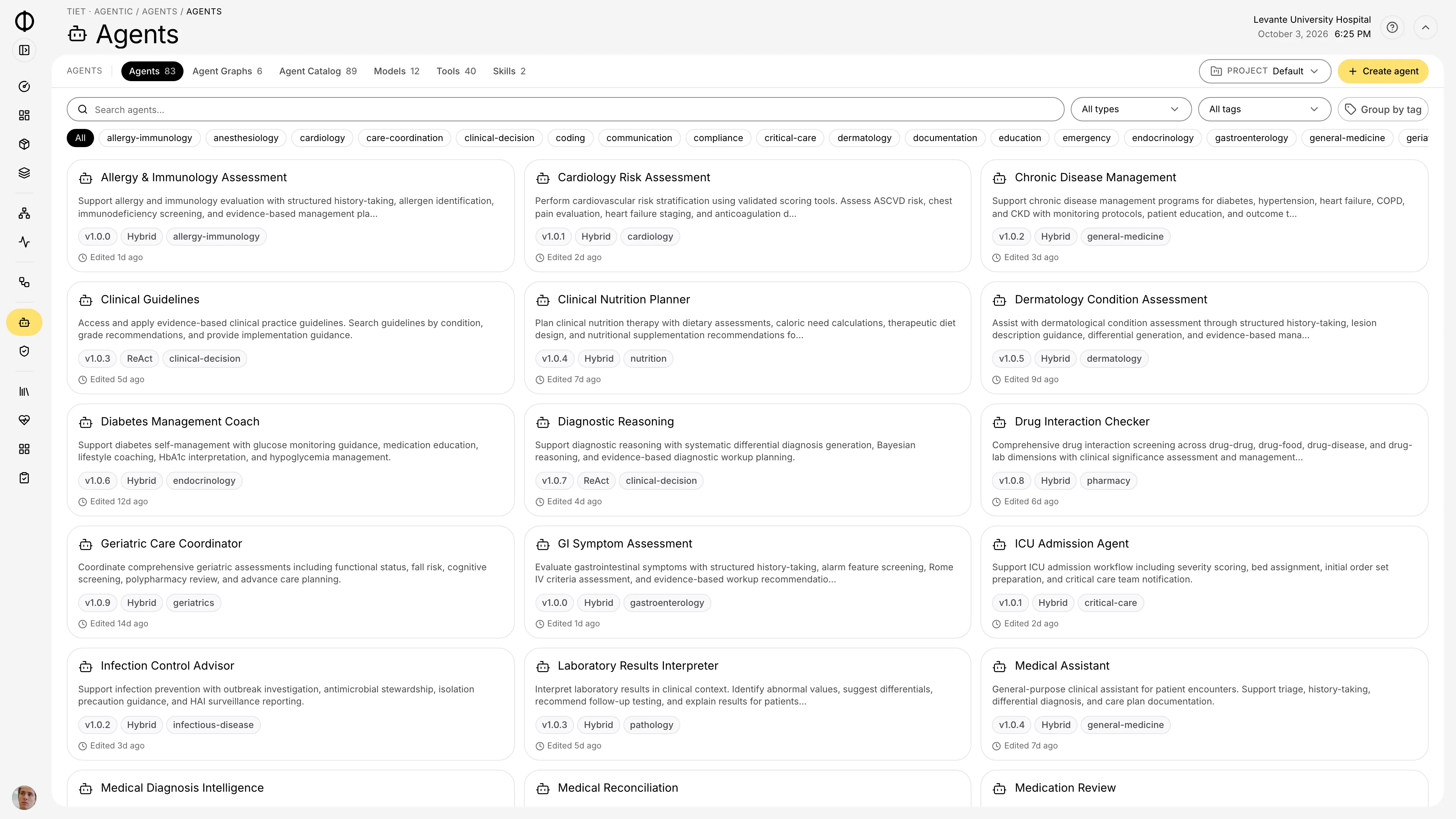
Choose the instructions, tools, skills and knowledge for each agent. Every change is versioned, and the agent reads live data through Tiet · Connect.
Read the docs (opens in a new tab)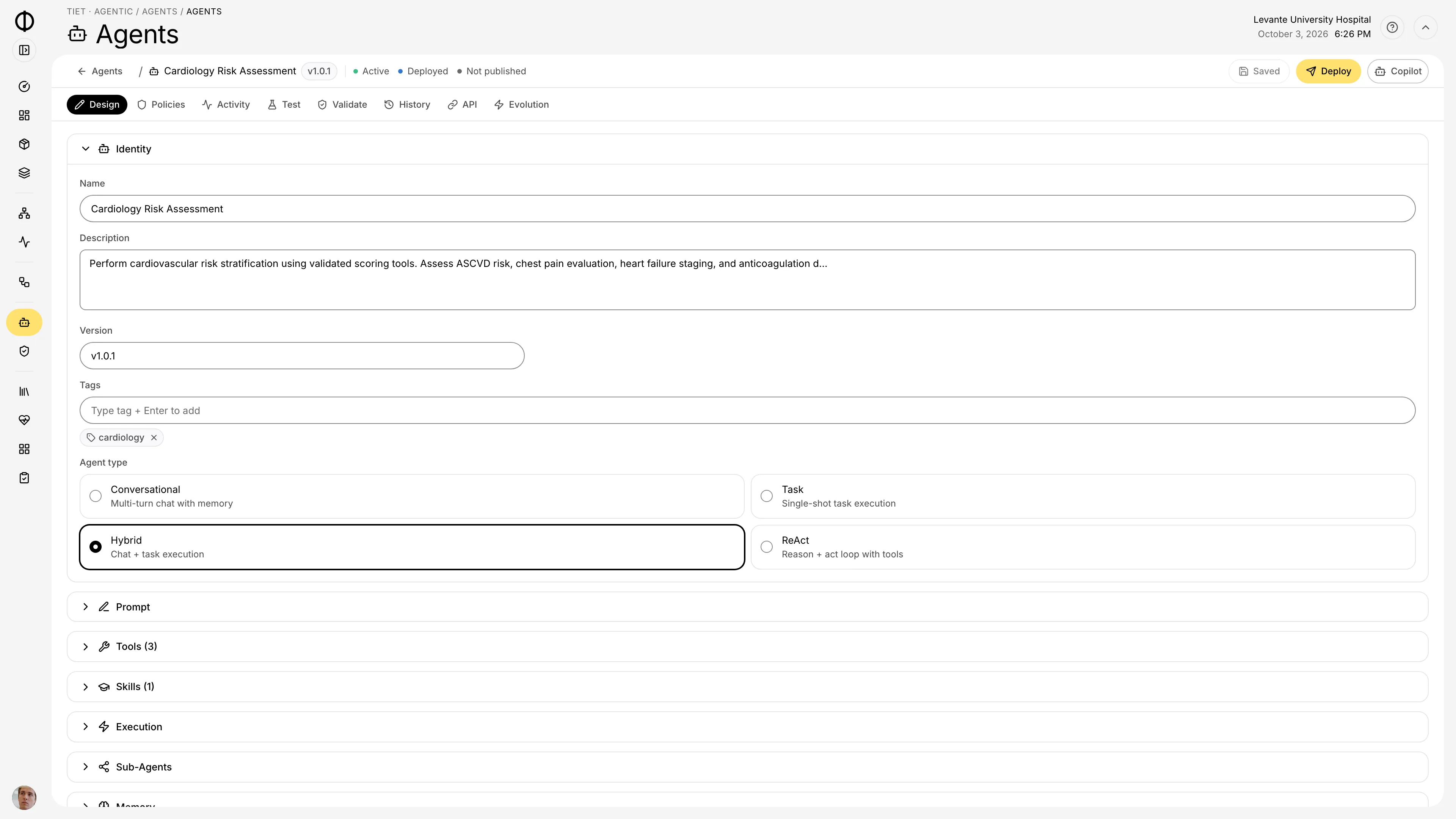
Agents call tools within sandbox policies, timeouts and approval gates, so every action stays bounded and traceable.
Read the docs (opens in a new tab)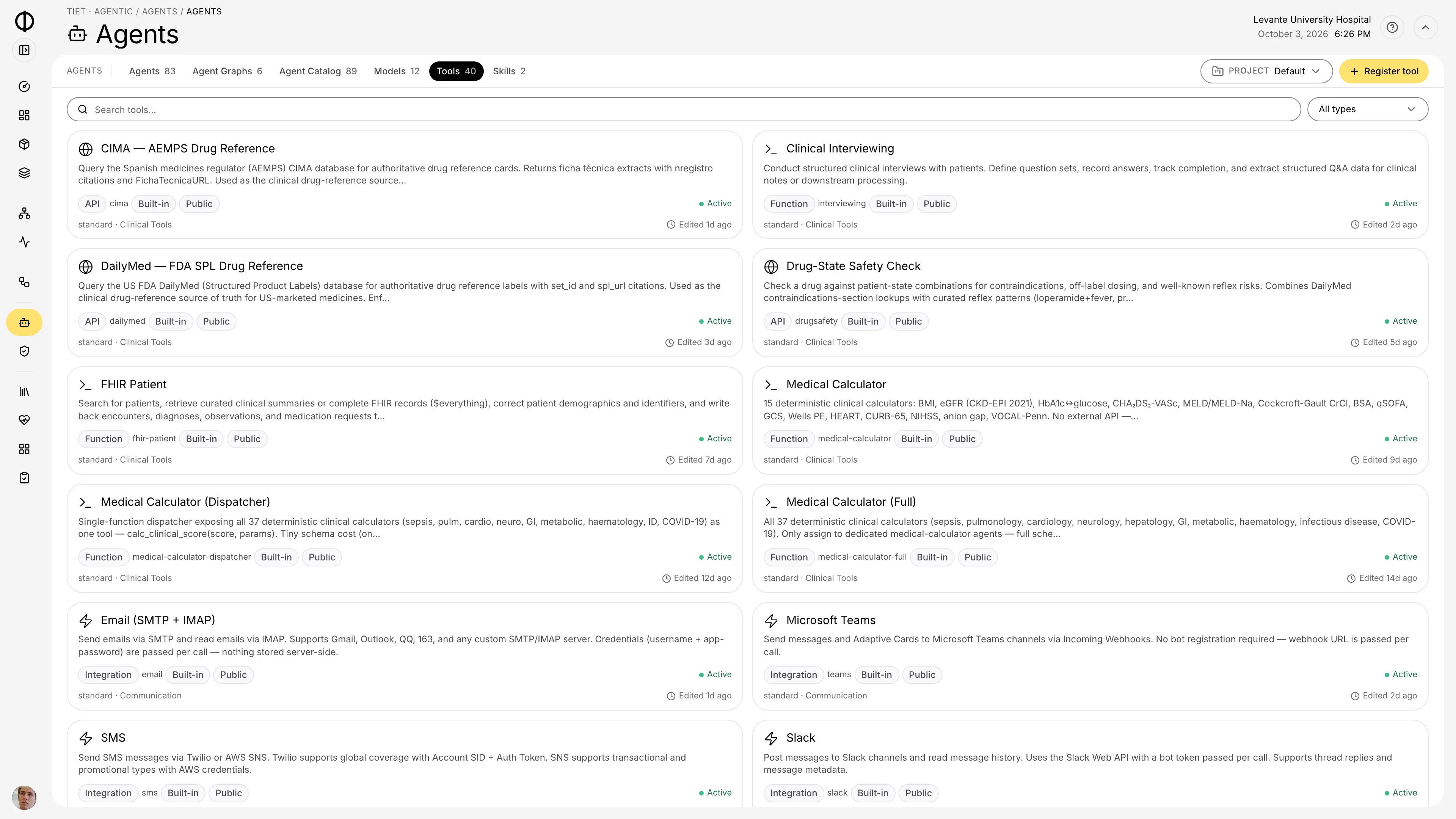
Pick from a multi-vendor model registry, and run inference in the cloud or on-premise to match your data-residency rules.
Read the docs (opens in a new tab)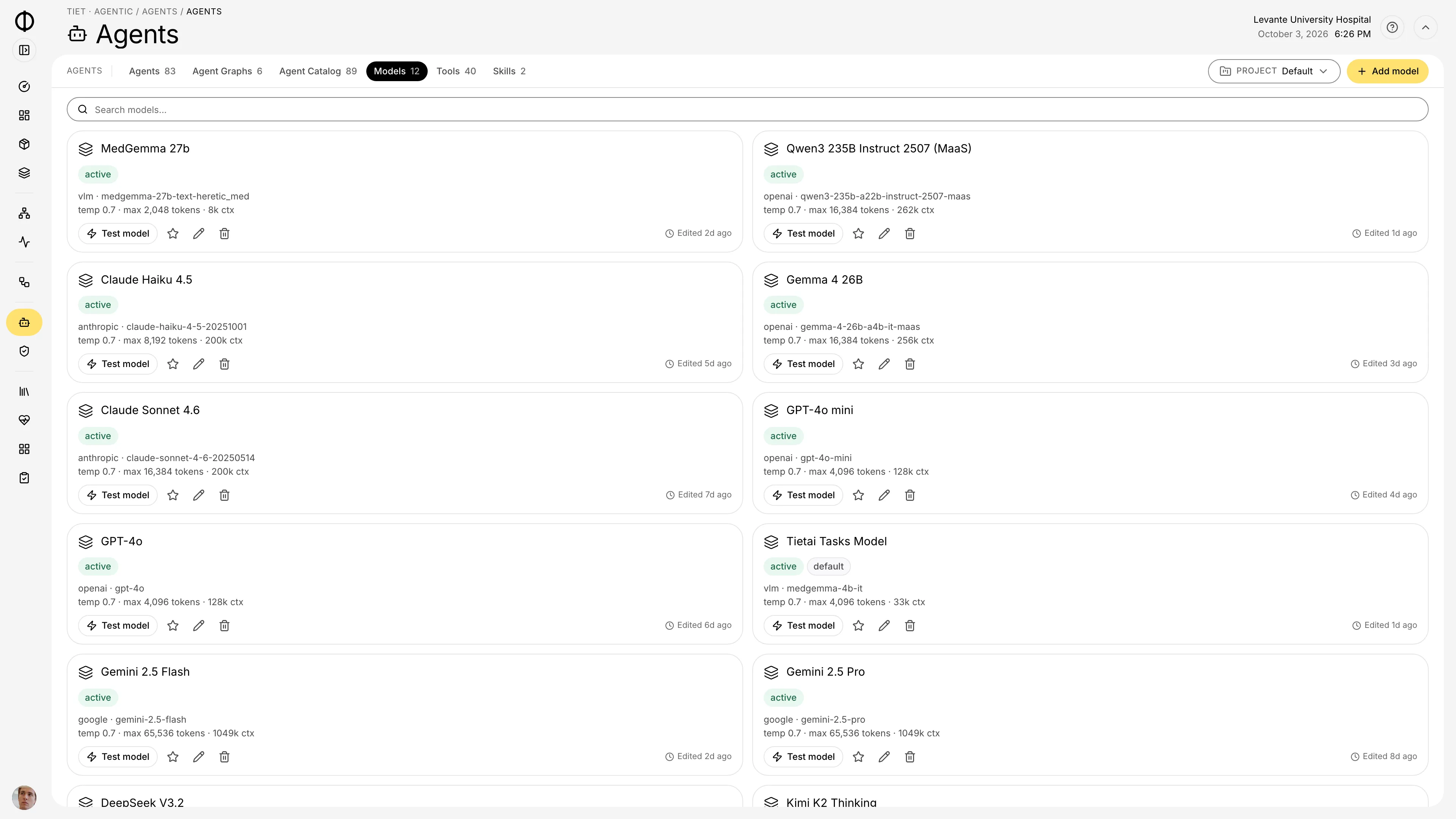
Agents flag appointments at risk of no-show, prepare the outreach and propose backfills. Your team approves the moves.
Role agents draft the transfer brief from their slice of the record, with every statement cited to its source.
Notes are generated inside the video consultation, with inference in the cloud or on-premise for each market.
Notes drafted in Catalan and Spanish, grounded in the patient's FHIR history and written back to SAP.
Review an agent's scope, model and system access, then authorise it with conditions. Any change resets it to pending.
No. You choose a model for each agent from a multi-vendor registry, and inference can run in the cloud or on-premise.
Not on anything consequential. Agents prepare and execute bounded tasks, and approval gates hold any step with clinical or financial consequence until a named person signs off.
It depends on its intended purpose; the platform has no medical purpose on its own. Tiet · Agentic records each agent's purpose, risk tier and obligations, and repeats the assessment whenever its claims, tools, knowledge or workflow placement change.
An example plan runs six weeks with an exit criterion each week, including qualification sign-off by your risk owner. Your data readiness and approval criteria set the actual schedule.

We use strictly necessary cookies to run tiet.ai and, only with your consent, analytics to improve it. You can accept all, reject non-essential, or choose by category. Read our Cookie Policy.
Strictly necessary cookies are always on. Turn a category on to consent, or off to withdraw. Read our Cookie Policy.
Needed to run the site: security, load balancing and remembering your cookie choices.
Remembers choices you make to improve your experience. None are in use at the moment.
Measures how the site is used so we can improve it, set only with your consent.
| Name | Provider | Purpose | Category | Duration |
|---|---|---|---|---|
| cookieConsent | TietAI | Remembers your cookie choices | Strictly necessary | 12 months |
| Google Analytics | Audience measurement, set only with consent | Analytics | See Cookie Policy |
 ISO/IEC 27001Certified
 Certified · High